

Tanjong Malim, December 20, 2025- The students of Mathematics, Faculty of Science and Mathematics (FSM) organised the Service Learning Malaysia-University for Society (SULAM) program entitled From Aid to Regret: How Poor Financial Awareness Leads Students into Wasteful Spending Habits located at Sultan Azlan Shah Campus, Sultan Idris Education University (UPSI), Perak.
The programme aims to enhance financial literacy among UPSI students by equipping them with fundamental knowledge and practical skills in budgeting, responsible spending and effective management of financial aid such as PTPTN and monthly allowances. In addition, the program seeks to raise awareness of the long-term consequences of poor financial decisions, including financial stress, debt accumulation and lack of savings, in order to encourage UPSI students to develop sustainable financial habits that support their academic success and future financial stability.
Under the guidance of Professor Madya Dr. Nurul Akmal binti Mohamed, students from SMF3013 (Financial Mathematics) course were appointed as the facilitators to carry out the programme. A total of 50 students from different courses ranging from Year 1 until Year 4 participated in this programme. They answered the analysis survey questions to evaluate their level of financial awareness, budgeting knowledge and spending behaviour. This information was then used to analyse students’ financial habits and to support the development of a financial awareness programme that is relevant and responsive to the needs of UPSI students.

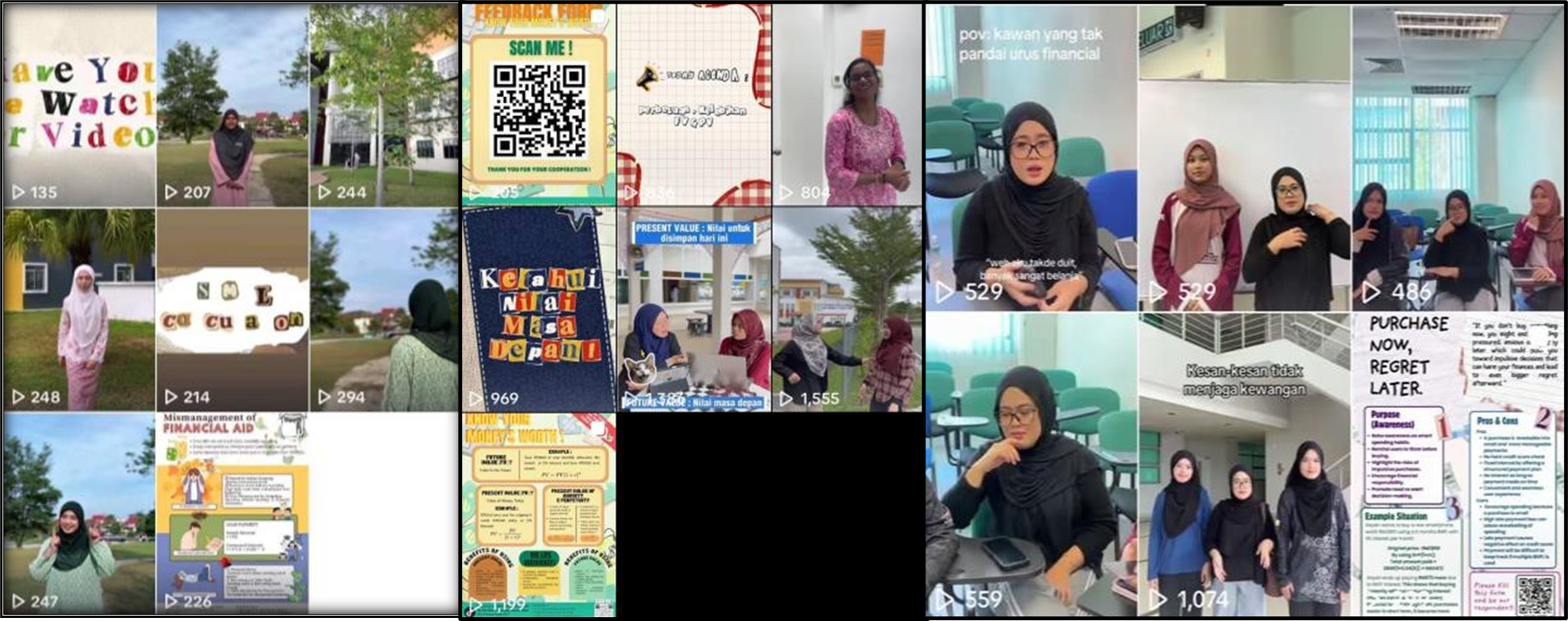
The Sulam project was designed using short social media videos to reach students more effectively, recognising that most students today are highly active on digital platforms. By presenting financial mathematics in a familiar and engaging format, the project connected mathematical concepts to real-life situations commonly faced by students, such as managing PTPTN funds and monthly allowances. This approach made abstract concepts more relatable and helped students see how financial decisions directly affect their daily lives.
Through these videos, concepts such as simple interest, compound interest, present value, and future value were explained using practical examples like borrowing money, saving, and planning for long-term goals. Simple interest illustrated how debt can increase when students misuse financial aid, while compound interest showed how unpaid balances and repeated borrowing can cause debt to grow more rapidly over time. Present value emphasised the importance of thinking carefully before spending money today, and future value demonstrated how even small, consistent savings can grow significantly through compound interest if managed wisely. This encouraged students to move away from impulsive lifestyle spending and towards smarter budgeting habits.
By integrating financial mathematics with real-life student experiences, the project highlighted how poor financial awareness can lead from aid to regret. Students who lack budgeting knowledge often misuse PTPTN or allowances, fall into impulsive spending
patterns, and eventually face debt, stress, and low savings. This article demonstrates that without proper financial literacy, financial aid meant to support education can instead become a source of long-term financial burden. Through social media-based learning, the project aimed to improve financial awareness, promote responsible money management, and help students make better financial decisions for a more secure future.
In conclusion, financial aid such as PTPTN and student allowances is intended to support students’ educational needs and ease their financial burden. However, when this assistance is accompanied by poor financial awareness, it often leads to impulsive and wasteful spending habits. The misuse of educational funds, combined with a lack of basic budgeting knowledge, encourages a lifestyle-driven approach to spending rather than responsible financial planning. As a result, many students experience regret when funds are depleted prematurely, forcing them to rely on borrowing or informal debt to meet essential needs.
Overall, the advocacy project received positive feedback from the student community and successfully achieved its intended objectives. The combination of infographics, short videos, and interactive feedback tools helped students better understand the importance of managing financial aid responsibly. Many participants reported improved awareness of their spending habits and a clearer understanding of basic financial calculations after engaging with the advocacy materials.