

By: Chong Min Yi and Dr. Syazwan Saidin
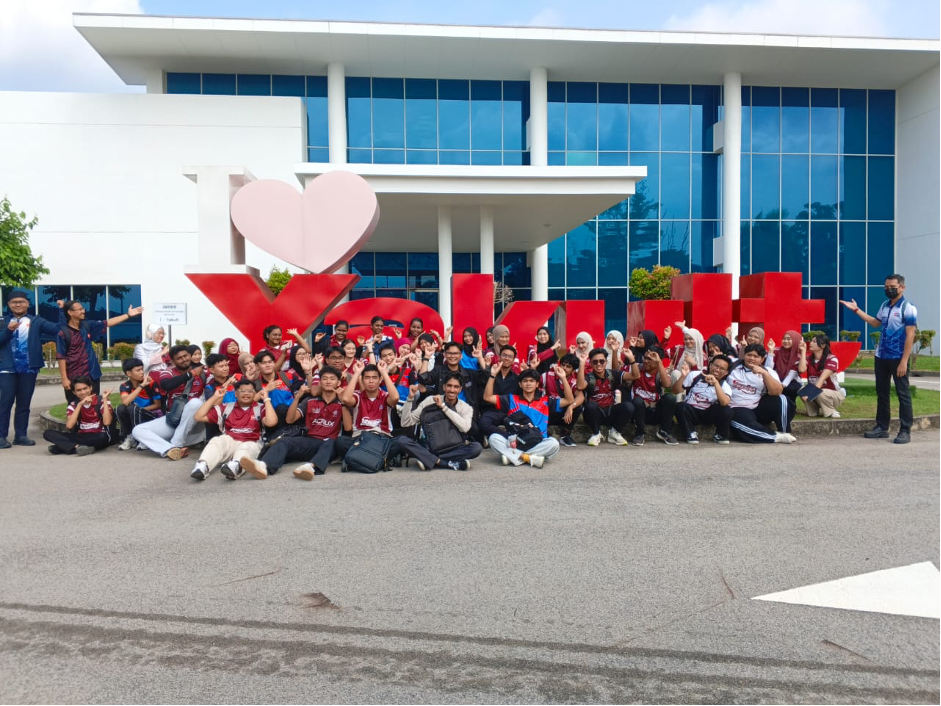
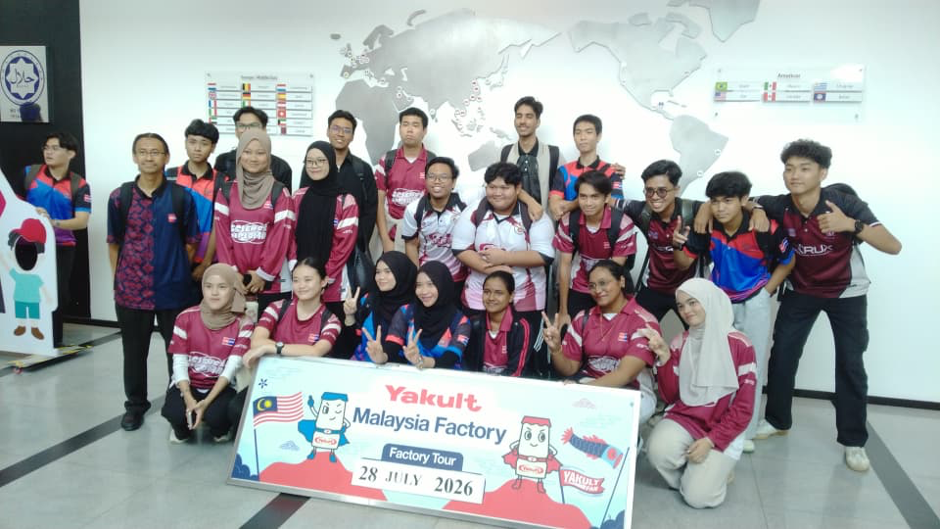
SEREMBAN– Students from Universiti Pendidikan Sultan Idris (UPSI) gained valuable first-hand exposure to industrial fermentation technology during an academic visit to the Yakult Malaysia factory here on July 28.
The visit involved Diploma Science students enrolled in the SBT1053 Biotechnology for Industries course and was led by course coordinator Dr Syazwan Saidin, accompanied by assistant science officers Mr Qayyum and Mr Mohamad Yusri.
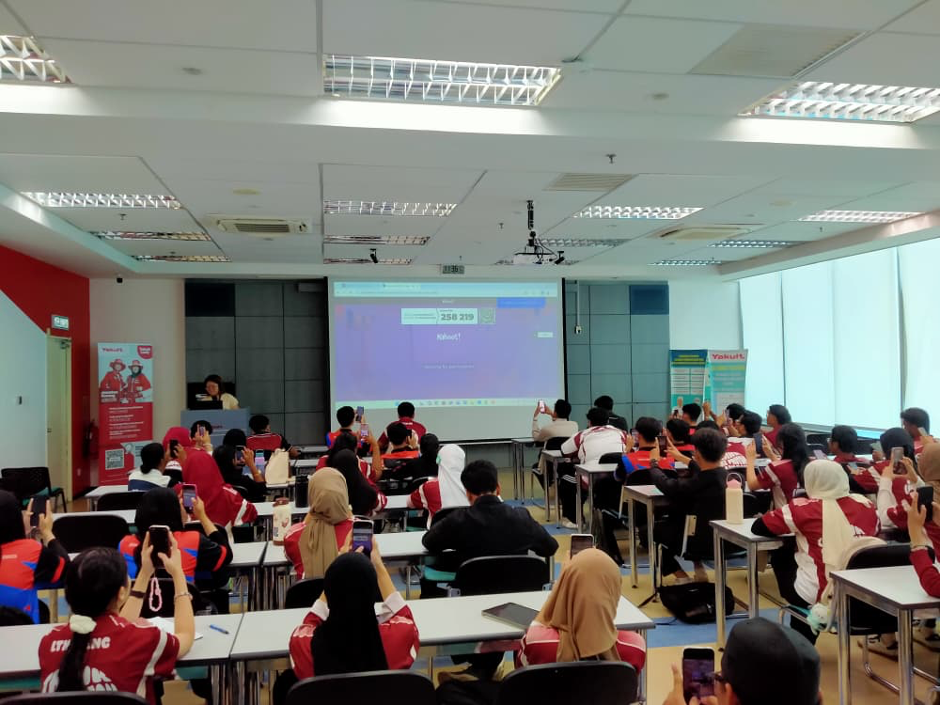
The programme provided students with direct insight into how biotechnology principles taught in the classroom are applied in a commercial manufacturing environment.
Dr Syazwan said the visit was organised to strengthen students’ understanding of fundamental biotechnology concepts, particularly fermentation, while bridging the gap between theoretical learning and industrial practice.
“The visit allowed students to observe how fermentation technology is applied in the large-scale production of probiotic beverages,” he said.
“It also encouraged them to communicate effectively, ask relevant scientific questions and critically compare laboratory-scale experiments with industrial production.”
During the visit, students were introduced to the various stages of Yakult’s manufacturing process, including raw material preparation, fermentation, quality control, bottling and packaging.
They also observed specialised equipment and large-scale production systems that are not typically available in university teaching laboratories.
The experience helped them better understand how biological processes are carefully monitored and controlled to ensure product quality, consistency and safety in an industrial setting.
In addition to technical knowledge, the visit aimed to develop essential soft skills such as communication, observation, teamwork and critical thinking.
Student Fatin Nur Afifah described the visit as an eye-opening experience that highlighted the sophistication of industrial fermentation technology.
“I was truly amazed by the fermentation technology used at the factory. It helped me understand how a biological process can be systematically managed on an industrial scale,” she said.
Another student, Hendayson, said the programme made classroom concepts more meaningful and easier to grasp.
“The session was very impactful because we could relate what we learned in class to real industrial applications,” he said.
Laachvithaa Sree said observing a real industrial bioreactor was one of the most valuable parts of the visit.
“I was able to see a real bioreactor, which is not normally available in our teaching laboratory,” she said.
“Seeing the equipment directly gave me a clearer understanding of how fermentation is conducted on a much larger scale.”
Mr Qayyum and Mr Mohamad Yusri also supported the students throughout the programme by guiding their observations and helping them relate industrial processes to laboratory techniques and course concepts.
The visit successfully complemented classroom learning by turning abstract biotechnology concepts into practical, real-world applications. It also reflects UPSI’s commitment to experiential and industry-based learning in preparing graduates with strong scientific knowledge, practical awareness and relevant professional skills for the biotechnology industry.